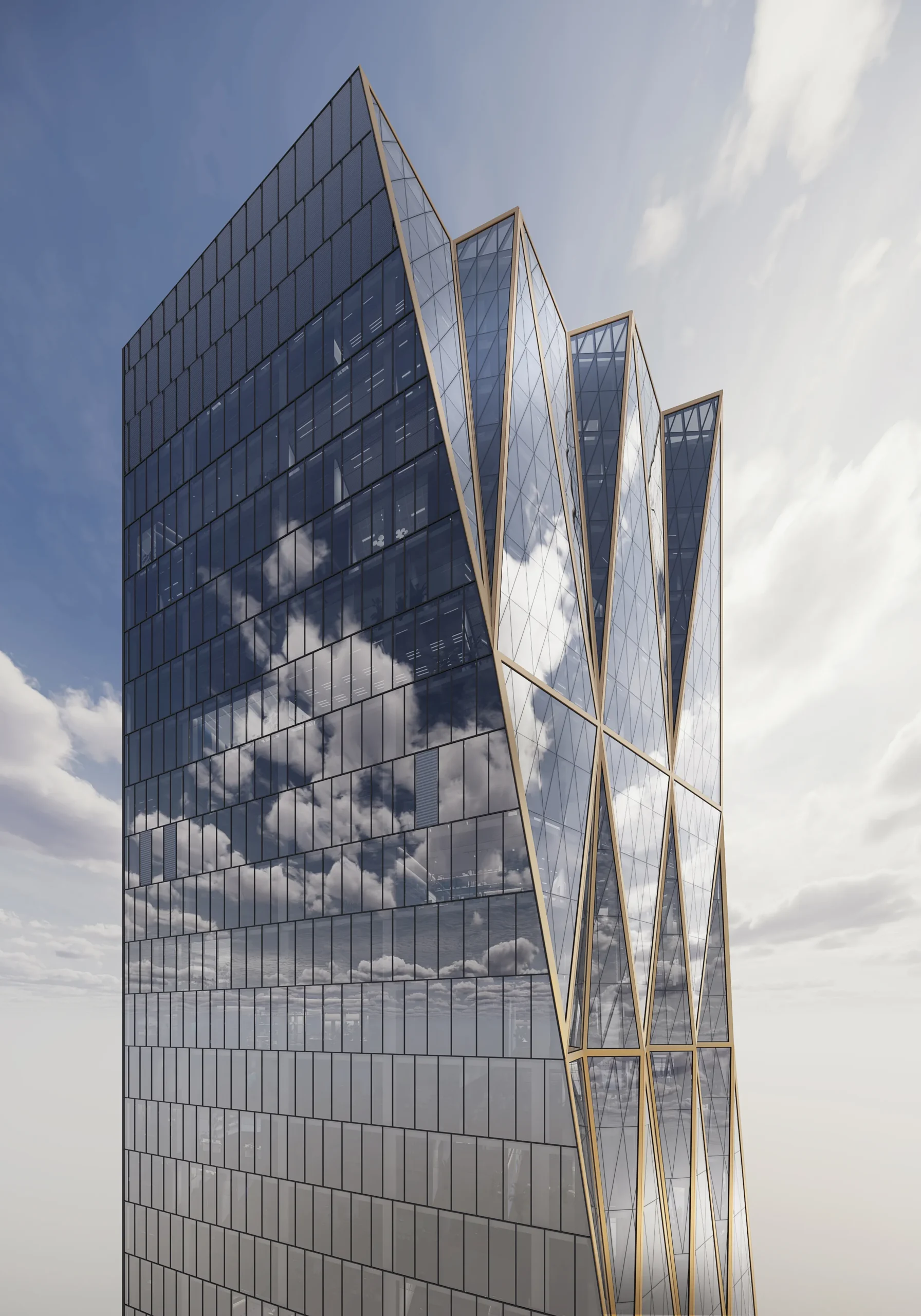
- office center "RE:PORT"
- location | Moscow
- status | under construction
- area | 42 467
- year | 2025
- awards | "International Jury's Choice" – Real Estate Property Awards 2026
- crew | Andrey Volyntsev, Anna Volyntseva, Rafael Mukhametsalikhov, Sergey Pavlov, Alexey Kovalev
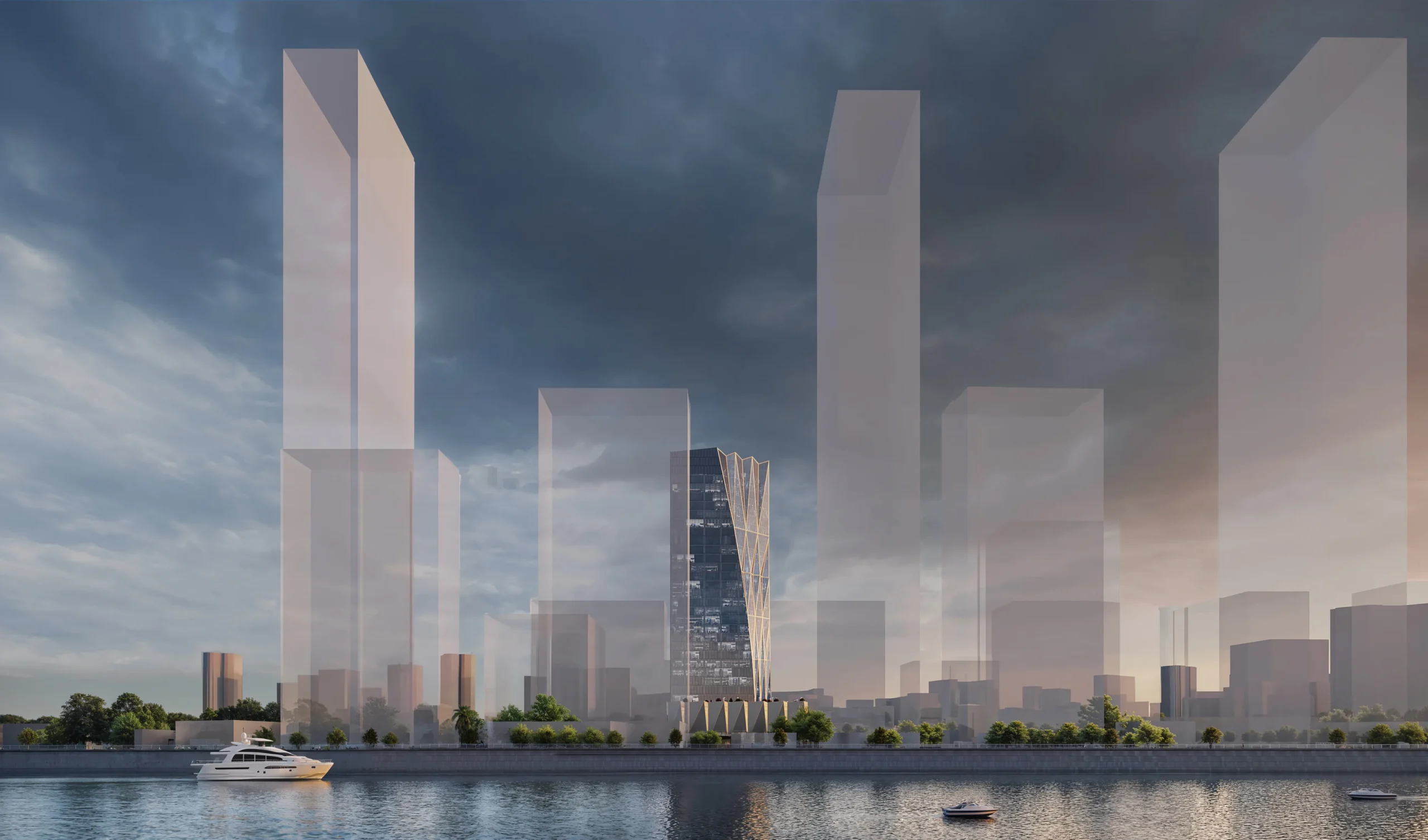
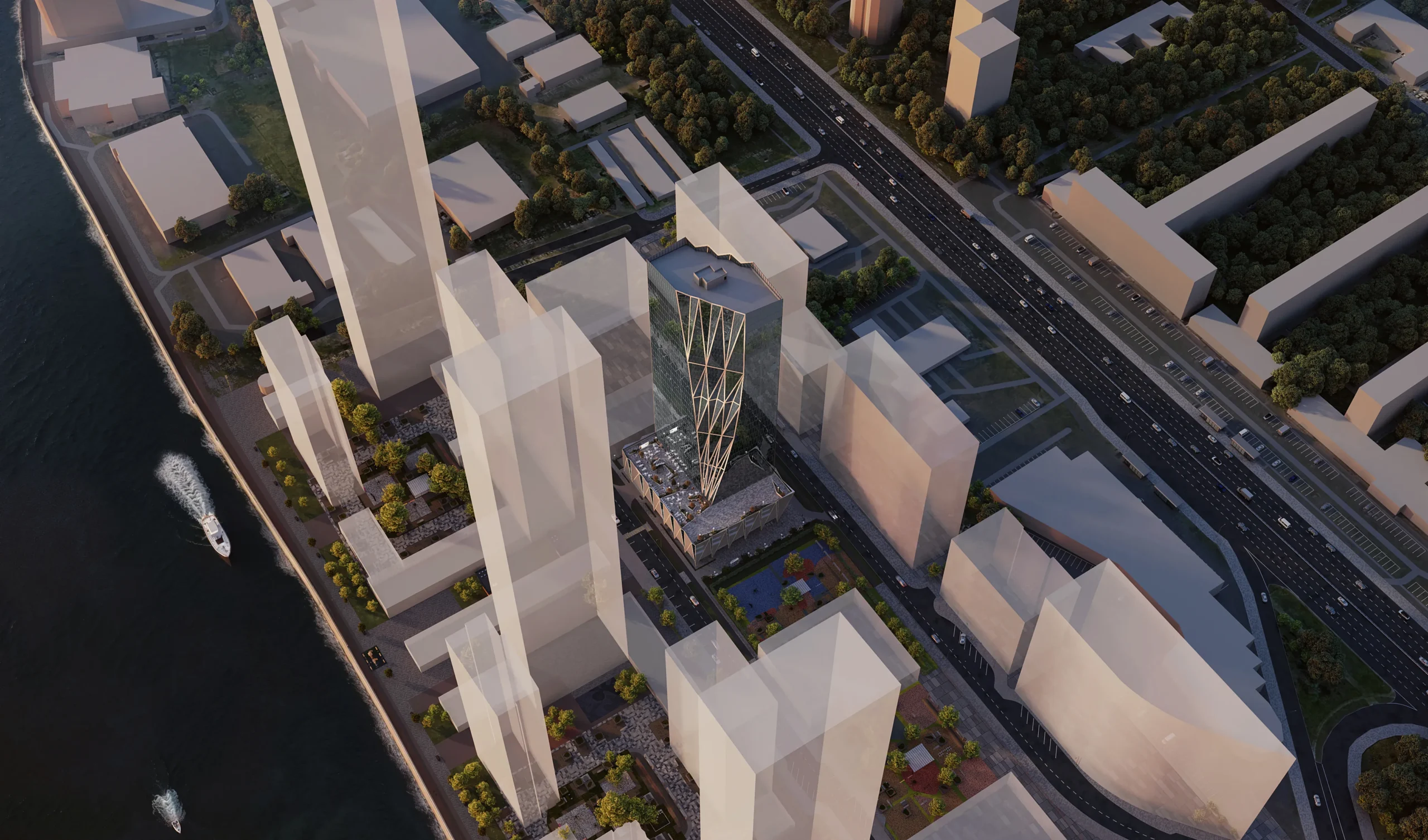
RE:PORT Business Center is part of a large-scale urban regeneration initiative aimed at the functional and visual transformation of the Northern River Port territory in Moscow. Within the framework of the city’s master plan for the coming decade, this former industrial area will evolve into a contemporary mixed-use district, incorporating residential, commercial, and social infrastructure, alongside a landscaped embankment fully integrated into the urban fabric.
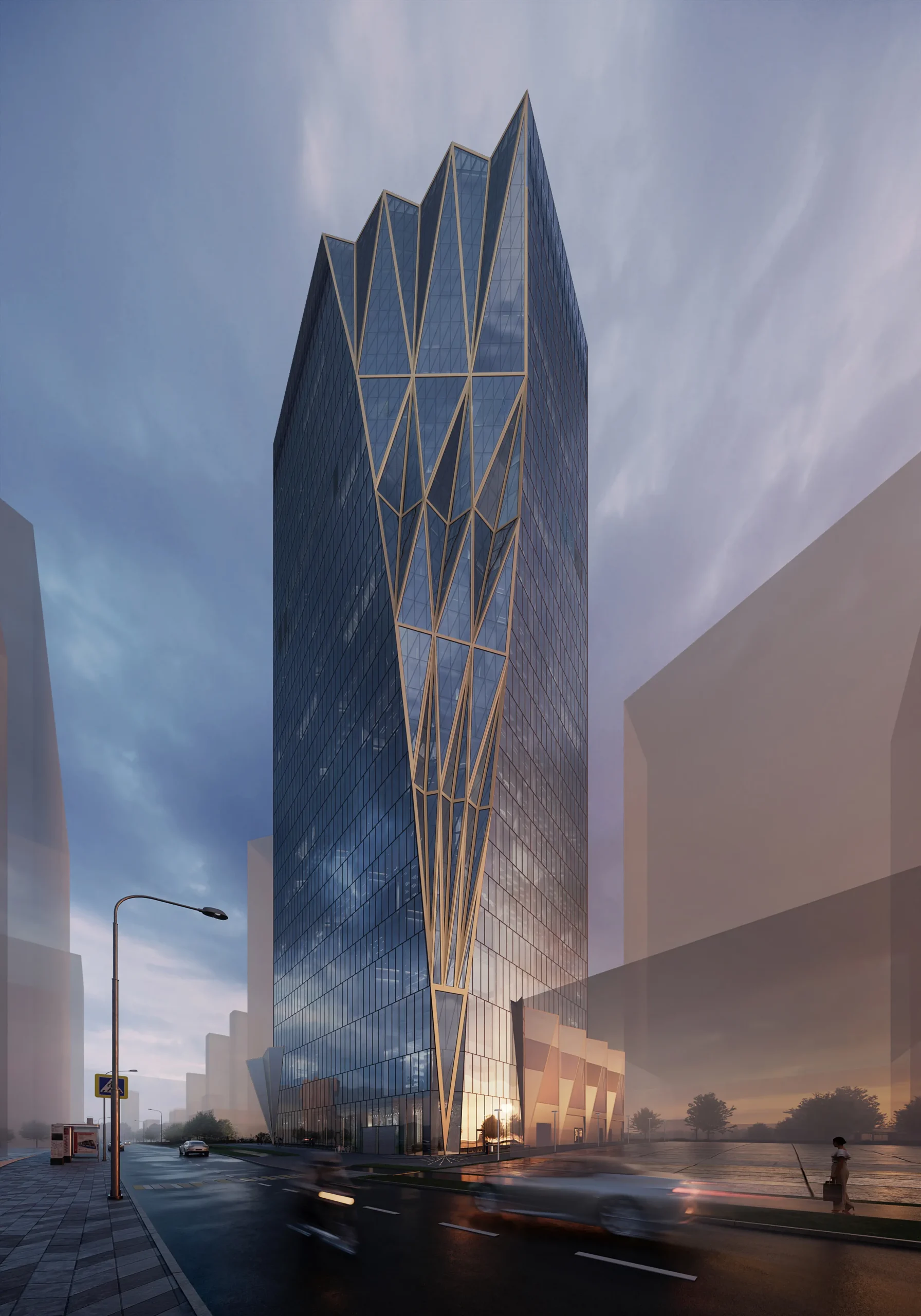
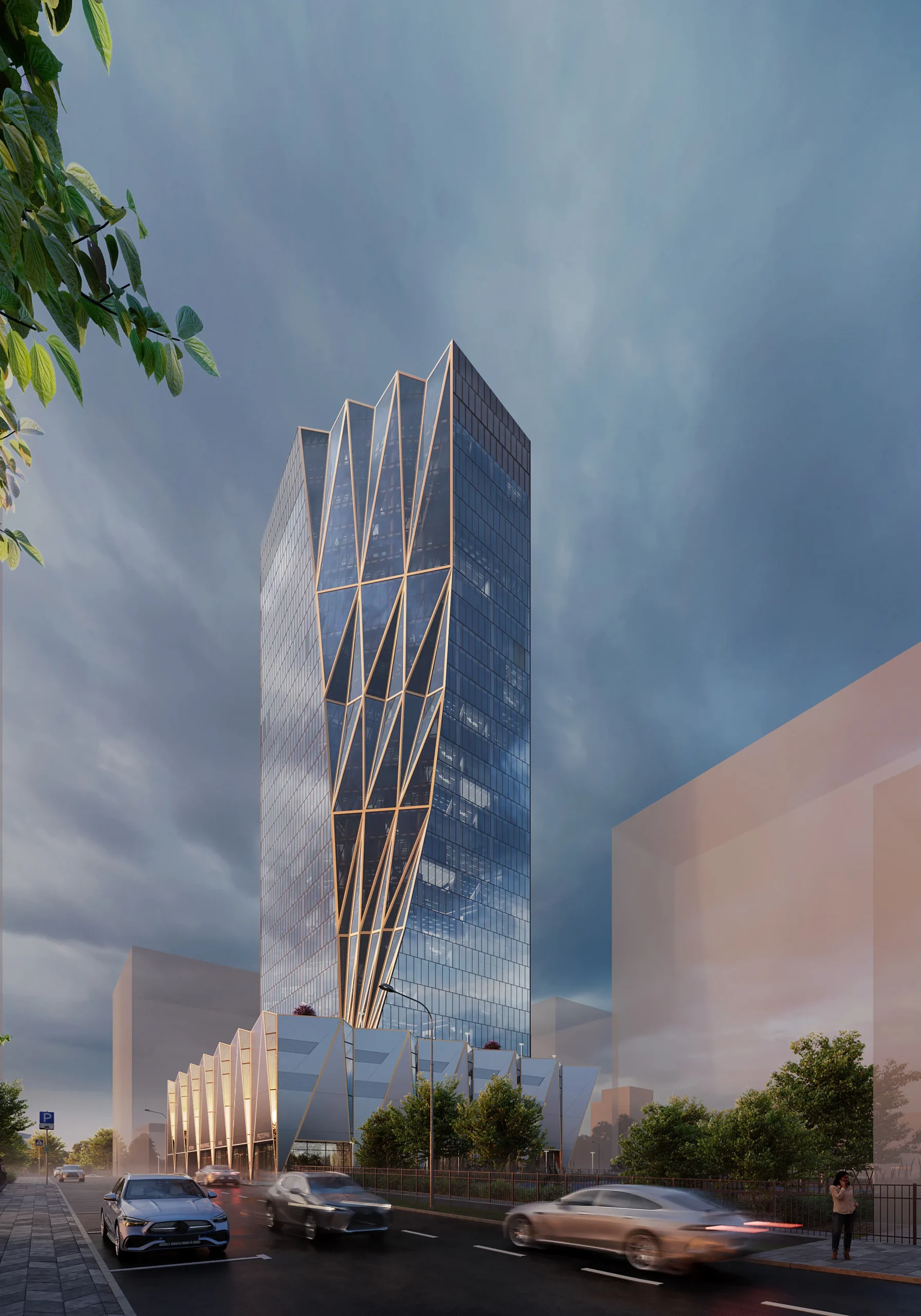
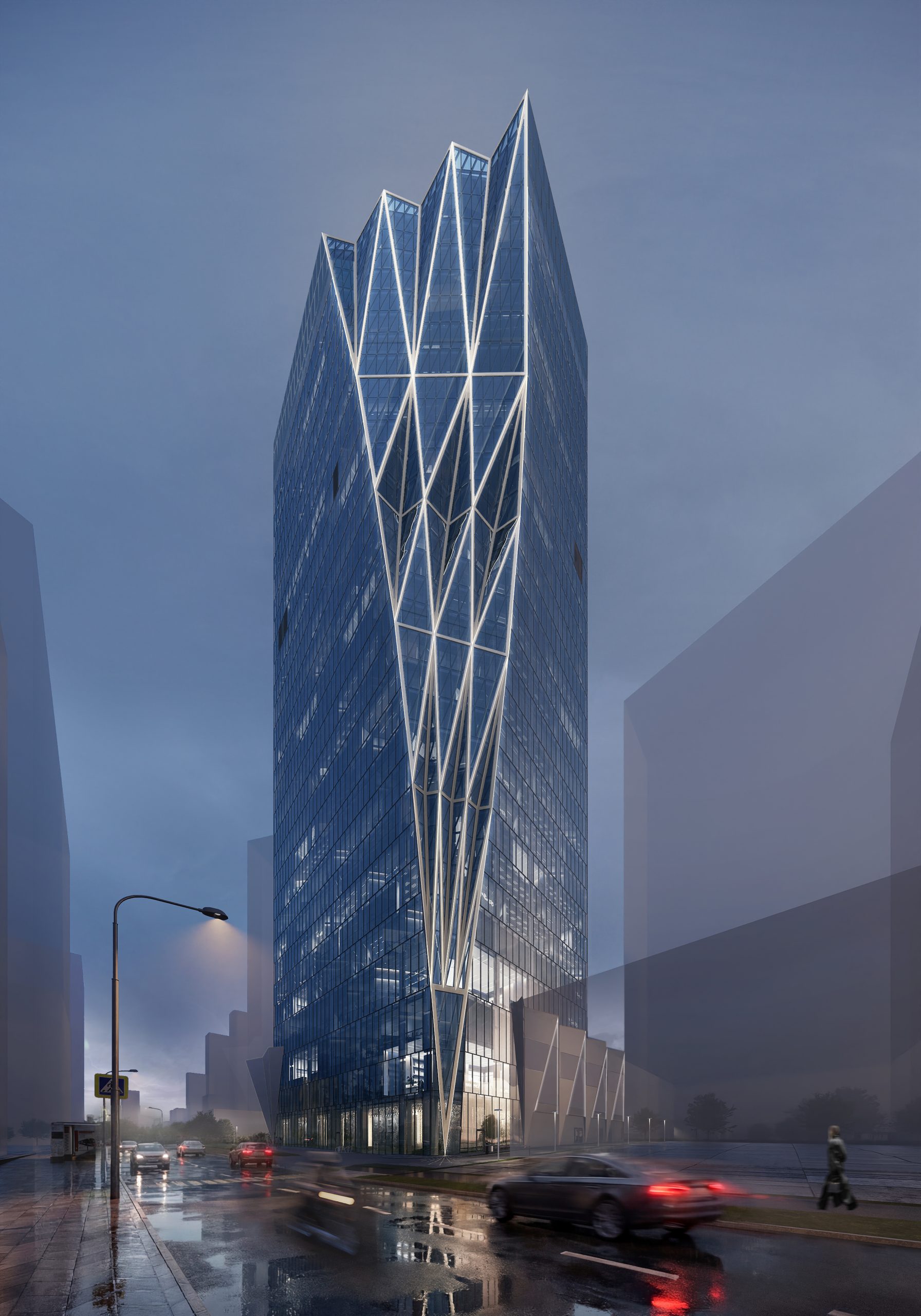
RE:PORT is conceived as a local landmark — both visual and conceptual. Its 135-meter tower, distinguished by a soaring “comet feather” element articulated across the façade, will serve as a prominent reference point from the riverfront as well as from the internal street network of the new neighborhood. Positioned beyond the first line of development, the building does not compete with the waterfront frontage; instead, it establishes a secondary yet more vertical and dynamic layer within the urban composition, visible through the residential volumes and reinforcing the spatial depth of the district.
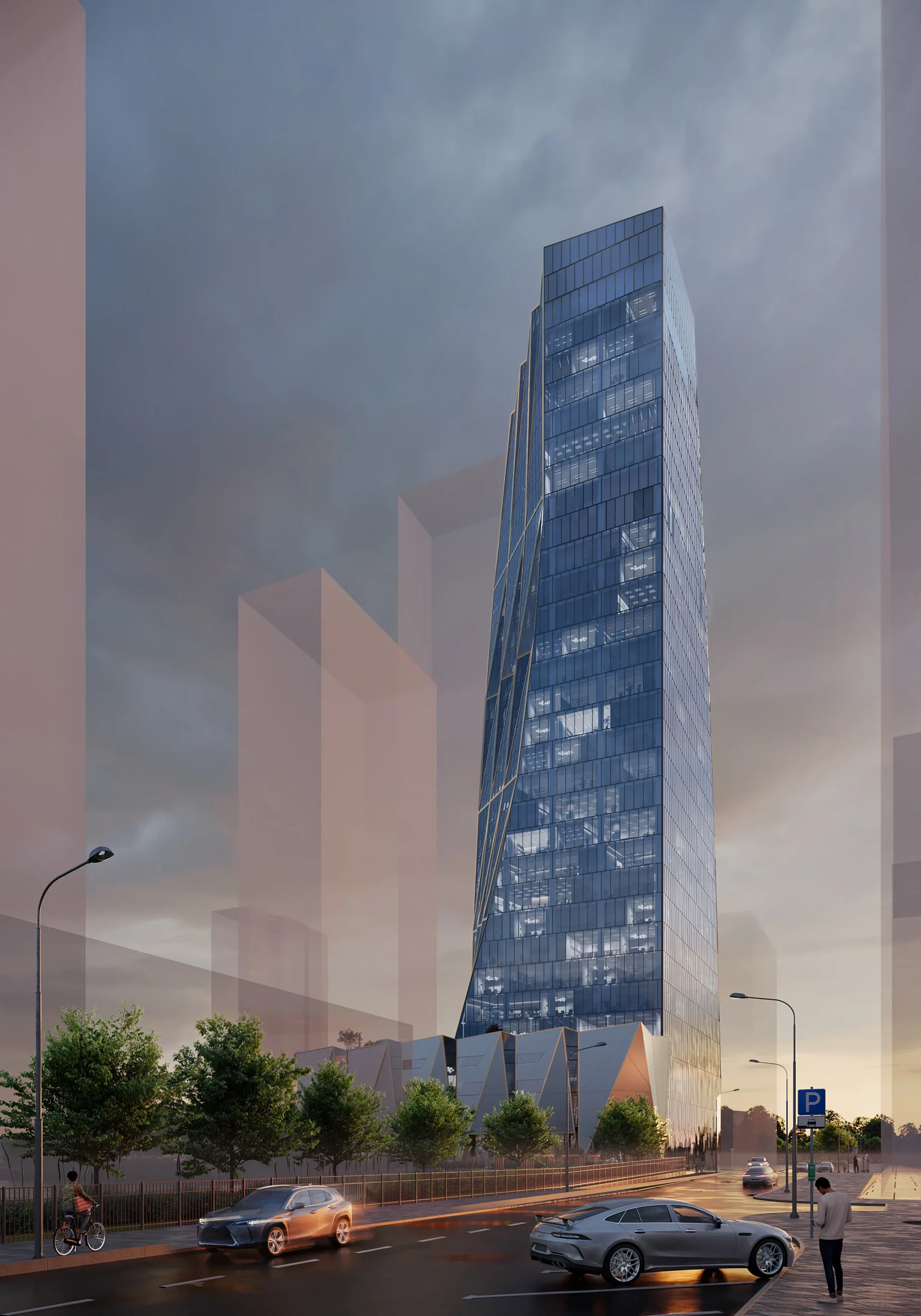
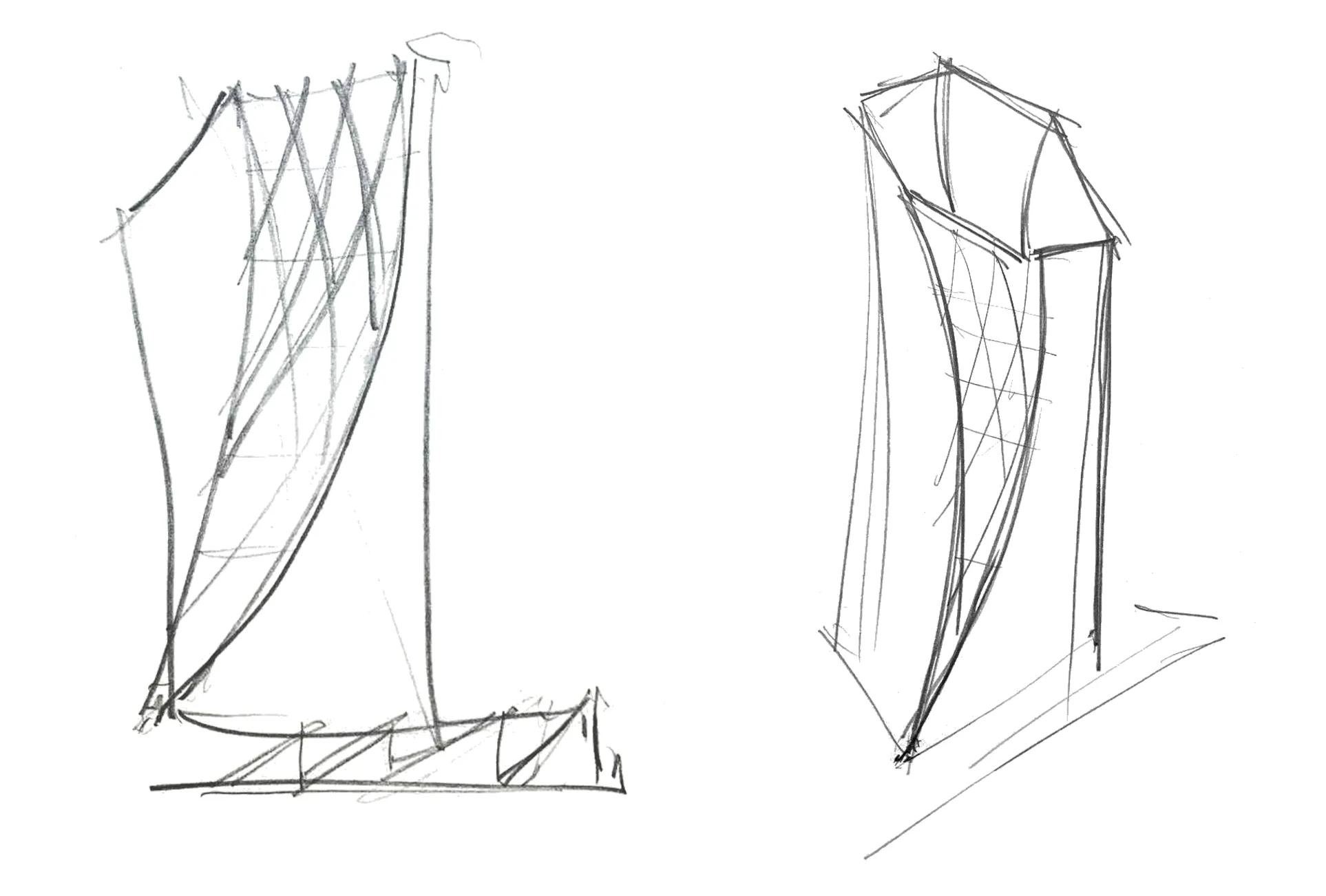
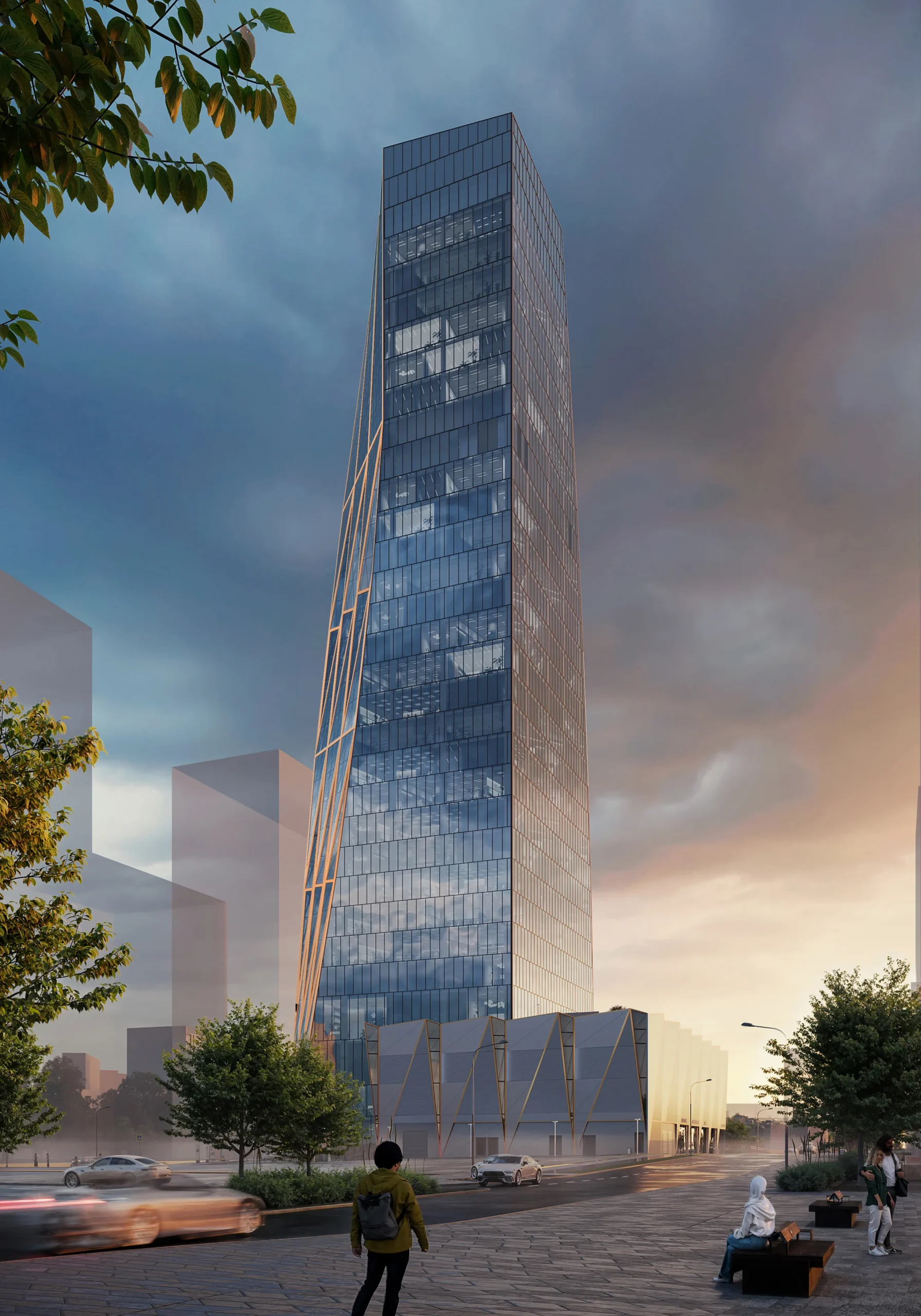
The conceptual identity of the business center emerged from a careful analysis of the dense perimeter development and its prevailing scale. In response to the surrounding orthogonal urban grid, the project introduces a volumetric composition with a plastically unfolded geometry. Diverging glass and metal planes across the façade generate the impression of a dynamic torsion, imbuing the structure with a sense of movement. The building appears to transform depending on the observer’s vantage point, while consistently maintaining its accentuated presence from multiple perspectives and across various layers of the cityscape.
The project is fundamentally grounded in a human-centered design philosophy. RE:PORT is envisioned not as a conventional office building defined by rigid typologies, but as a flexible environment for work, interaction, and well-being. Panoramic glazing maximizes daylight penetration and establishes a continuous visual connection with the river and the city, mitigating the sense of enclosure traditionally associated with office interiors.
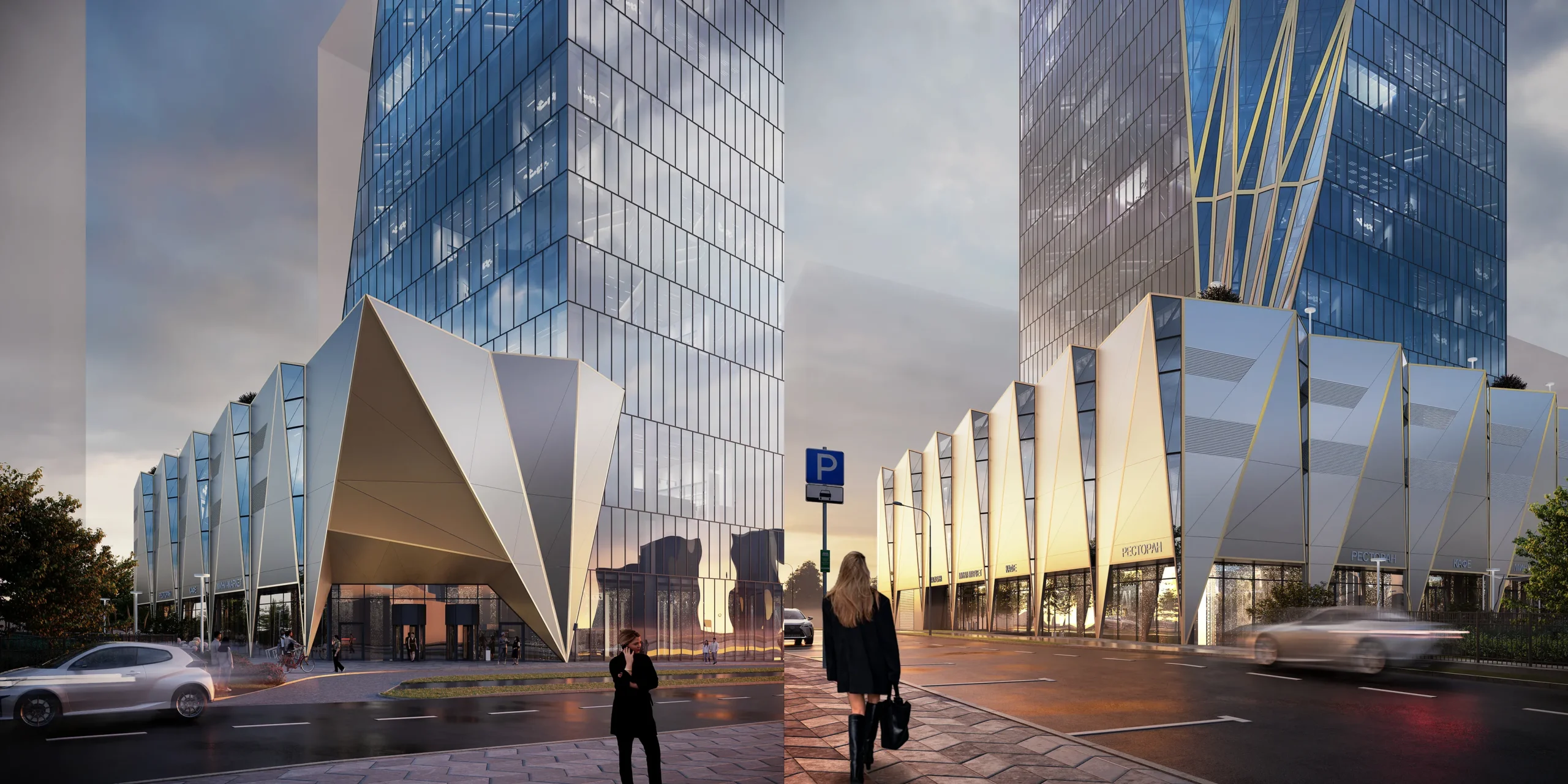
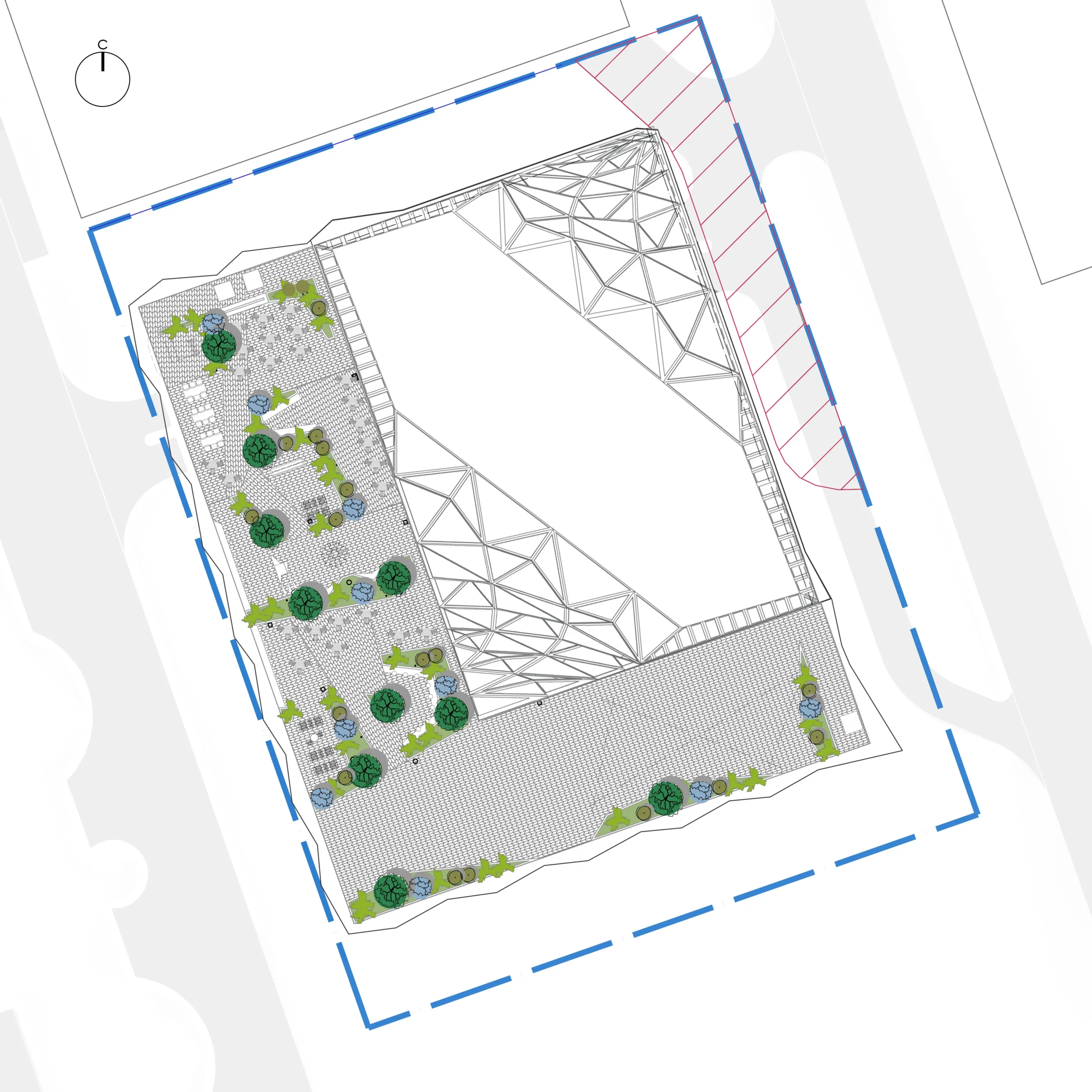
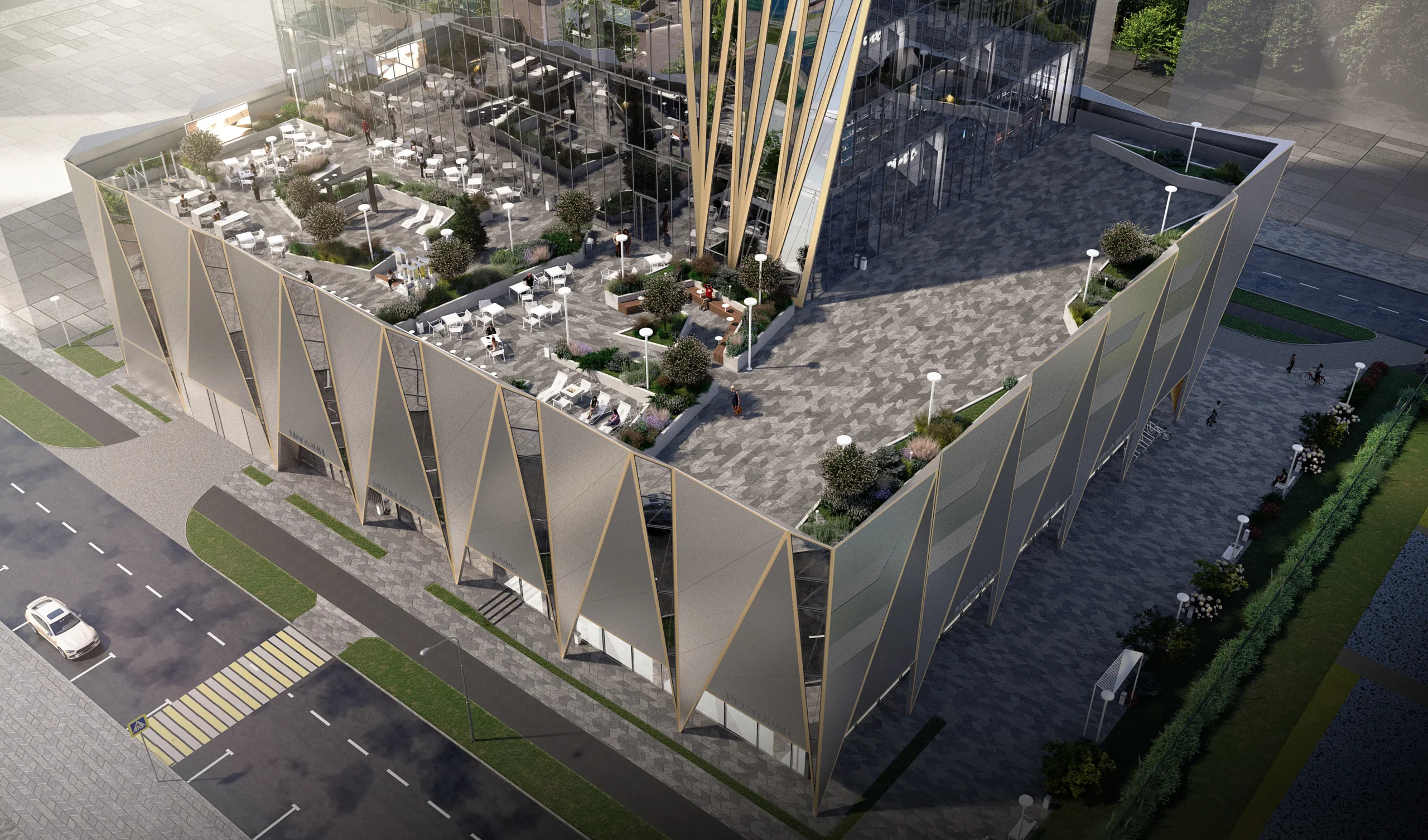
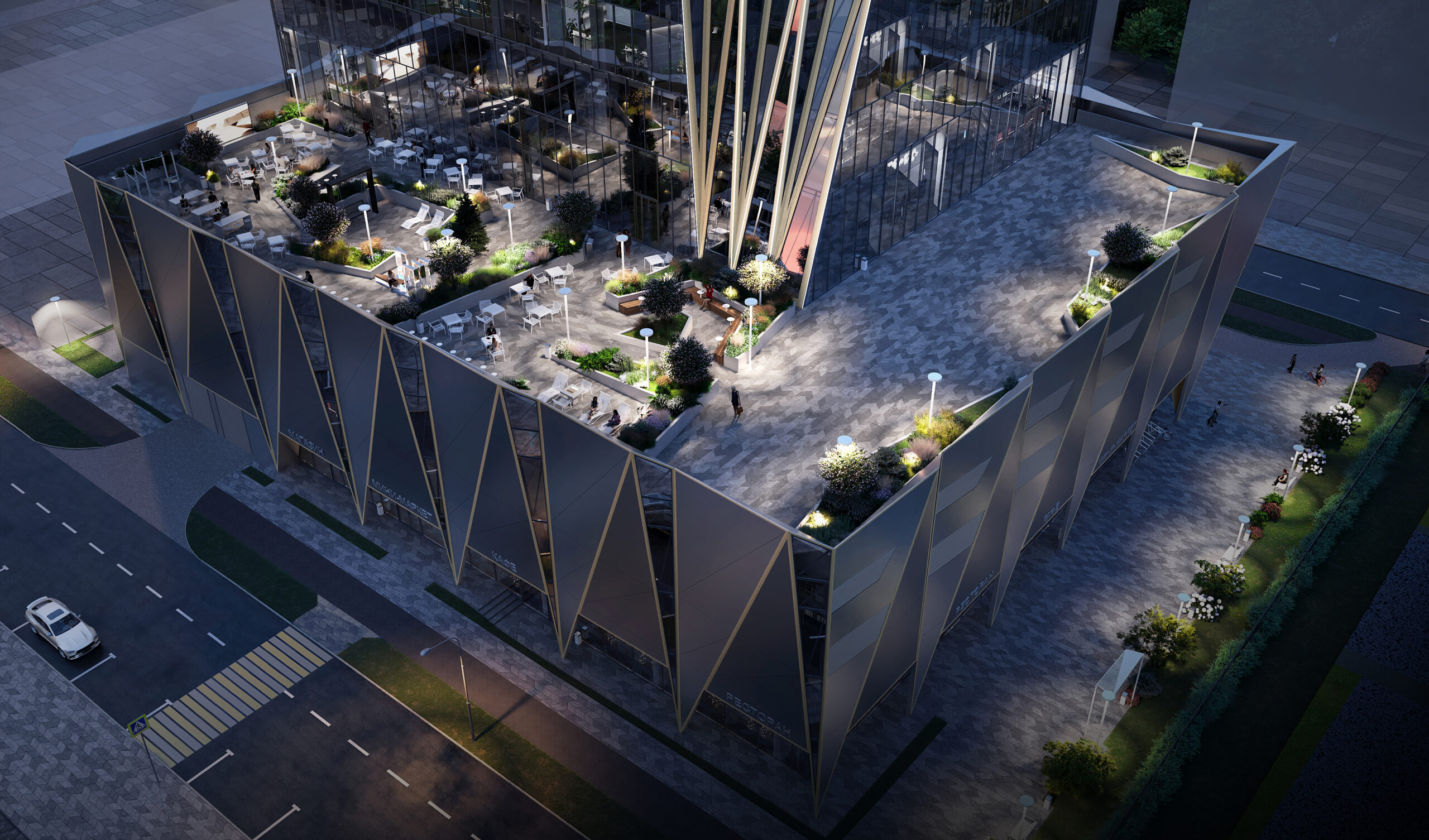
A key public feature is the landscaped terrace located atop the stylobate above the main entrance. This elevated open space becomes the social core of the complex — a platform for informal meetings, communication, and respite. In this way, the working environment is complemented by opportunities for varied spatial experiences within a single architectural framework.
The internal planning structure prioritizes adaptability and spatial fluidity. Open-plan office areas, communal zones, and vertical circulation cores are organized to encourage freedom of movement and accommodate diverse working formats. The principle of work-life balance is embedded not as a rhetorical statement, but as a spatial strategy — realized through natural light, generous proportions, panoramic views, green terraces, and comfortable shared environments.
Ultimately, RE:PORT functions not only as a catalyst for business activity within the renewed district, but also as an architectural emblem of the Northern River Port’s transformation — marking its transition from an industrial past to an open, dynamic, and human-oriented urban future. The building synthesizes expressive plasticity, urban significance, and considered functionality, proposing a contemporary model of office architecture fully integrated into the life of the city.